 033-2231 8646/47
 info@e-cube.in
Once a harmonic analysis confirms distortion is a genuine problem — not just a suspicion — the next decision is which type of filter actually fits the load. Active and passive harmonic filters solve the same underlying problem with fundamentally different approaches, and the wrong choice either overspends on capability the plant doesn’t need or under-delivers against a shifting harmonic spectrum.
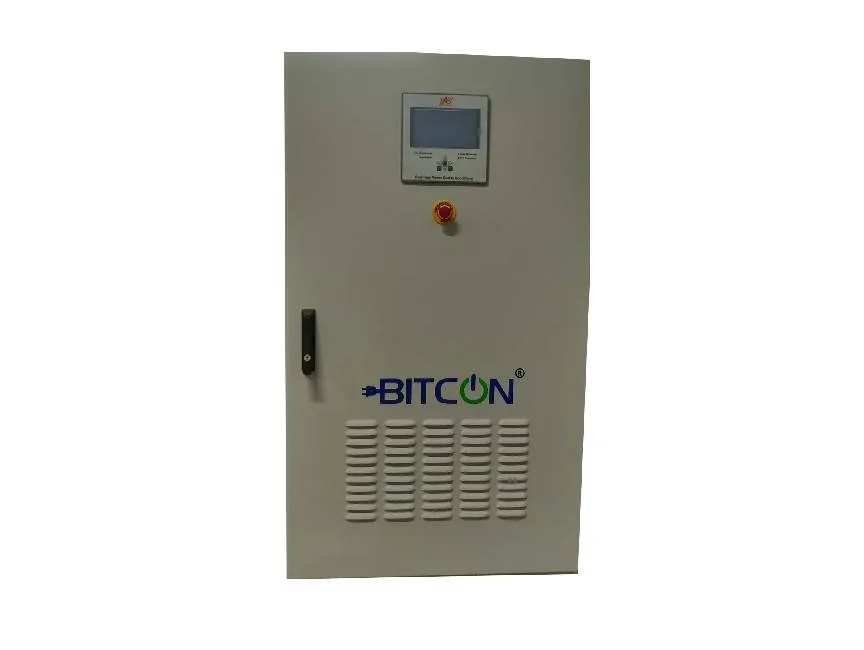
Passive harmonic filters: tuned and economical
A passive filter is essentially a capacitor bank in series with a reactor, tuned to present low impedance at one specific harmonic frequency (commonly the 5th, 7th, or 11th order) so that harmonic current preferentially flows into the filter instead of back into the supply, while also contributing power factor correction at the fundamental frequency. Because it’s a static LC circuit with no active electronics, it’s robust, low-maintenance, and significantly cheaper per kVAR of correction than an active alternative.
The trade-off is specificity: a passive filter tuned for the 5th harmonic does little for the 7th or 11th, and if the load’s harmonic profile changes (new machinery added, VFDs reprogrammed, load mix shifts), the filter may need retuning or supplementing. There’s also a resonance risk if the filter’s tuned frequency interacts badly with the rest of the plant’s impedance — sizing this correctly requires proper harmonic analysis, not a rule of thumb.
Active harmonic filters: adaptive and broad-spectrum
An Active Harmonic Filter (AHF) uses power electronics (IGBTs) to continuously measure the load’s harmonic current in real time and inject an equal, opposite-phase compensating current — cancelling harmonics across a broad range of orders simultaneously (typically up to the 25th–50th), and adjusting automatically as the load’s harmonic content changes. There’s no resonance risk, no retuning as loads evolve, and a single AHF unit can be sized to protect an entire bus rather than one specific load.
The cost of that flexibility is upfront capital cost and, to a lesser degree, ongoing power electronics maintenance — a real consideration but usually outweighed by the value of protecting a facility whose load mix will keep changing over its lifetime.
Which one fits your plant
- A single dominant, stable harmonic source (one large 6-pulse VFD, for example) with correction and PF improvement both needed — passive filtration is often the more economical fit.
- A mixed, evolving load with multiple harmonic-generating sources (VFDs, UPS, electronic ballasts, varying production mix) — active filtration handles the breadth without needing to be re-engineered every time the load changes.
- Facilities under strict grid-connection THD limits, or with sensitive control/automation equipment nearby, generally benefit from the tighter, adaptive correction active filtration provides.
Many larger installations use both: passive filtration handling the bulk, predictable harmonic load and bulk PF correction cost-effectively, with active filtration mopping up the remaining spectrum and handling load variability.
Related reading: browse our passive harmonic filters and active harmonic filters (AHF) ranges.