 033-2231 8646/47
 info@e-cube.in
Most plant managers first hear the words “power factor” from their accounts department, after a monthly electricity bill arrives heavier than expected. The mechanics of exactly how a poor power factor inflates a bill are worth understanding in detail — it’s rarely a single line item, and the true cost is usually larger than the penalty alone suggests.
The direct penalty
Most Indian state electricity boards structure tariffs with a PF incentive/penalty band, typically referencing 0.90 or 0.95 as the threshold. Fall below it and a surcharge applies — often calculated as an additional percentage on the demand or energy charge for every percentage point PF sits under the threshold. Maintain PF above it, and many utilities offer a rebate instead. The swing between penalty and rebate at the extremes of a facility’s PF range can be a meaningful percentage of the total bill.
The indirect cost: paying for capacity you can’t use
Utilities bill maximum demand (MD) in kVA, not kW. A facility with poor PF draws more kVA for the same useful kW output, and MD charges are usually a fixed rate per kVA of the highest demand recorded in the billing period — regardless of how briefly that peak occurred. Correcting PF reduces the kVA figure directly, which can lower the MD charge independent of any explicit PF penalty line.
The cost hiding inside the plant
Reactive current doesn’t stop at the meter — it flows through the plant’s own internal cabling, transformers and switchgear too, adding I²R losses (heat, wasted energy) at every stage. This shows up as slightly elevated energy consumption across the board rather than a single identifiable charge, but it’s real, ongoing, and compounds over the equipment’s lifetime.
A representative example
Consider a facility with a 500 kVA contracted demand running at 0.75 PF. Correcting to 0.98 PF reduces the same real load’s apparent power demand to roughly 383 kVA — freeing over 100 kVA of transformer and cable capacity, removing any PF penalty, and in many tariff structures qualifying for a rebate instead. The capacitor bank required typically pays for itself well within a year purely from penalty avoidance and MD reduction, before counting the loss savings or the freed capacity’s value for future expansion.
Fixing it without overspending
The right correction is sized against measured reactive demand across the actual load cycle, not a guess from the average PF on last month’s bill — oversizing wastes capital, undersizing leaves the penalty partially in place. A short measurement exercise with a power analyzer at the main incomer settles this precisely before any equipment is specified.
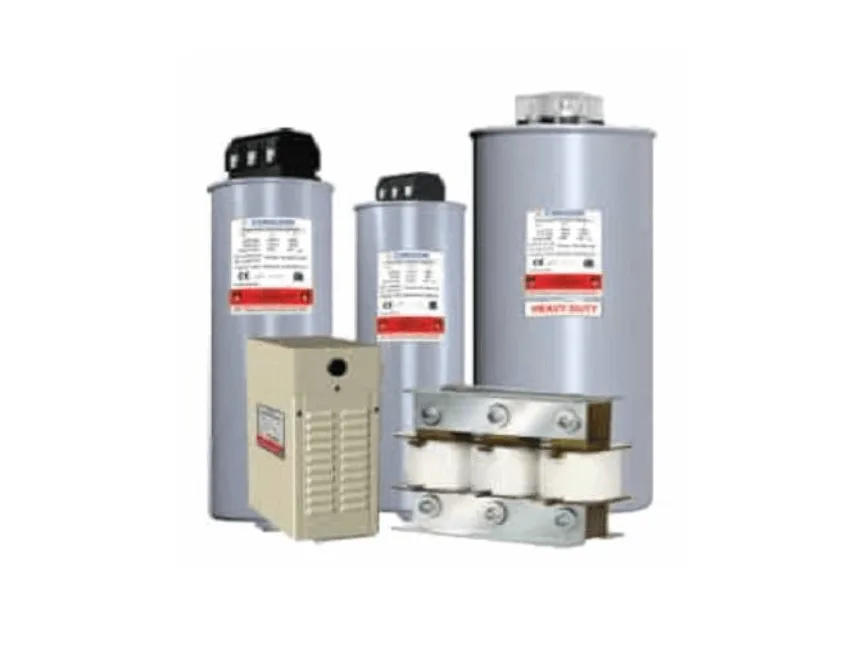
Related reading: see our power factor correction range, sized to your facility’s actual measured demand.